
Vacuum Emulsifier Supplier for India: 415 V, OTR and Project Import
India is the only market in this series where the machine itself has to change. The industrial supply is 415 V, not the 380 V our standard build uses, and a 380 V motor run on 415 V sits 9% over its rating for its whole service life. Two other things differ: the machinery certification everyone is still preparing for was withdrawn in January 2026, and a full plant can be imported at 5% basic duty instead of 7.5% per machine.
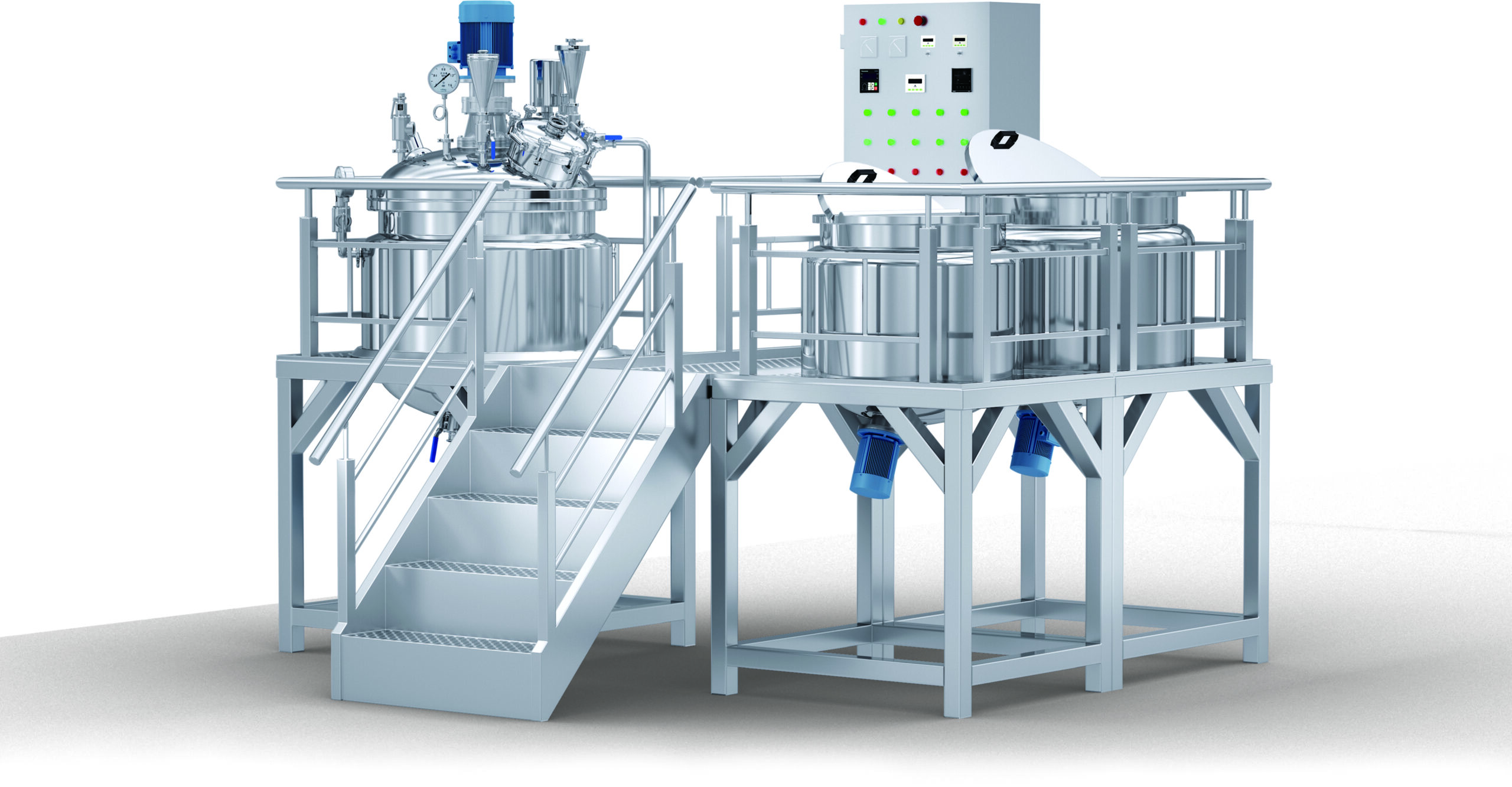
Order the machine at 415 V, not 380 V. India’s industrial supply is nominally 415 V three-phase at 50 Hz with a ±6% statutory band, and a 380 V motor running on it sits about 9% above nameplate for the life of the installation — which is why the motor winding and control transformer are a specification decision, not a shipping detail. Beyond voltage: the Omnibus Technical Regulation that would have required BIS certification for machinery was rescinded in January 2026, so no Scheme X certificate is needed for the machine itself; and a complete plant can clear at a flat 5% basic duty under project import instead of 7.5% per machine, provided registration happens before the goods arrive.
Four things that differ from a Vietnam or Indonesia project
Three of these four are commonly reported wrongly by suppliers who copied a page written two years ago. The fourth is a saving most importers never claim.
415 V, not 380 V
Same 50 Hz, different nominal. A standard 380 V build runs 9% over nameplate here. The winding, contactor coils and control transformer all change.
OTR was withdrawn
The machinery OTR was rescinded by S.O. 239(E) in January 2026. No BIS Scheme X certificate is required. Pages still saying otherwise are out of date.
Project import at 5%
A new plant or a substantial expansion can clear the whole set under 9801 at a flat 5% basic duty, against 7.5% per machine on separate bills.
CDSCO, not a notification
Cosmetics need a registration certificate and a named Indian authorised agent who carries the compliance liability. Not a self-filed notification.
The 415 V question, and why it is the whole ballgame
Vietnam runs 380 V. Indonesia runs 380 V. China runs 380 V. Our standard build is 380 V three-phase at 50 Hz and it drops into all three without a change. India runs 415 V three-phase at 50 Hz, with IS 12360 setting a ±6% statutory band that works out to roughly 390–440 V at the terminals, and industrial parks routinely drifting further during peak load.
Now do the arithmetic. 415 divided by 380 is 1.092. A motor wound for 380 V, connected to a 415 V supply, is operating 9.2% above its rated voltage — every shift, every batch, for the life of the machine. That is outside the +6% band the standard allows. The consequences are not dramatic and they are not immediate, which is exactly why they get missed: the winding runs hotter, the insulation ages faster, the contactor coils draw more current than they were chosen for, and the failure arrives two or three years later as an unexplained burnout that gets blamed on the product or the operator.
What actually changes on the order
This is not a transformer question and it is not solved by a voltage stabiliser. It is settled at the specification stage, in four places:
- Motor winding — the homogeniser, agitator and vacuum pump motors are wound for the order voltage. A 415 V winding is not a 380 V winding with a different label.
- Control circuit voltage — the control transformer secondary and every contactor and relay coil are selected against the panel supply, not against a default.
- Protection settings — thermal overload and breaker ratings are set for the actual full-load current at 415 V, which is lower than at 380 V for the same kW. Setting them from the 380 V column leaves the machine under-protected.
- Nameplate and documentation — the rating plate, the drawings and the material certificates all have to state 415 V, because that is what the plant electrician and any later auditor will read.
The current table, at both voltages
BFM-X hydraulic lifting series with electric heating, which is the worst case. The same kW draws less current at 415 V — so the feeder gets easier while the motor specification gets stricter. Both facts matter.
| Working capacity | Mechanical load | Electric heating | Total at 415 V | Current at 380 V | Current at 415 V |
|---|---|---|---|---|---|
| 500 L | 19 kW | 110.7 kW | 129.7 kW | approx. 232 A | approx. 212 A |
| 1,000 L | 26 kW | 146.5 kW | 172.5 kW | approx. 308 A | approx. 282 A |
| 2,000 L | 33.5 kW | 204.5 kW | 238 kW | approx. 425 A | approx. 390 A |
The mistake to avoid. A supplier ships the standard 380 V build because the two voltages are “close enough” and both are 50 Hz. The machine runs. It runs for two years. Then a motor fails, the replacement is quoted at 415 V, and the customer discovers the original was never right. Ask for the rating plate photograph before the machine ships, and check the voltage on it against your panel.

The BIS requirement that no longer exists
This is worth reading carefully, because a large amount of supplier content and consultancy copy still describes the pre-2026 position, and some of it is being sold as compliance preparation for a regulation that has been withdrawn.
The Ministry of Heavy Industries notified the Machinery and Electrical Equipment Safety (Omnibus Technical Regulation) Order, 2024 on 28 August 2024 under the BIS Act. It would have required a wide range of machinery — pumps, compressors, cranes, earth-moving equipment, metal-working machines, looms and their sub-assemblies — to carry a BIS Scheme X certificate of conformity, with a technical file and a conformity mark, assessed against machinery safety standards beginning with IS 16819 / ISO 12100 on risk assessment. A vacuum homogenising emulsifier with a control panel would have fallen inside that scope.
What actually happened, in date order
- 28 August 2024 — notifiedPublished as S.O. 3649(E) by the Ministry of Heavy Industries, with an implementation date of 28 August 2025.
- June 2025 — deferred a yearMoved to 1 September 2026 after industry representations.
- November 2025 — deferred again, no new dateThe Second Amendment Order, 2025 removed the fixed date and replaced it with “from such date as may be notified by the Central government”.
- 14 January 2026 — rescindedS.O. 239(E), published 16 January 2026, withdrew the order “in the public interest”, with immediate effect. There is now no BIS Scheme X certification requirement for machinery through this route.
The practical consequence: no Scheme X certificate, no conformity mark, no technical file under this order for a vacuum emulsifier imported into India today. If a supplier or a consultant is quoting you for OTR certification, ask them for the gazette notification number they are working to.
But do not read this as “no certification at all”. Two separate instruments still apply, and they are frequently confused with the OTR.
One. The Electrical Equipment (Quality Control) Order, 2020 remains in force and has been expanded. Low-voltage switchgear and control devices came under mandatory BIS certification from 10 November 2025. That is about the components inside a panel, not the machine as a whole — so if your specification calls for a particular breaker or contactor series, confirm the specific model carries a valid BIS licence rather than assuming the assembly is covered.
Two. Product-specific rules outside the omnibus route still apply where they exist — cosmetics under CDSCO, for example, and construction equipment under the motor vehicles rules.
Two other practical points survive the withdrawal. An authorised representative in India is still expected for imports generally, and remains mandatory for anything that does still need certification. And the withdrawal does not mean product quality requirements went away: the buyer’s specification and the contract now carry the safety burden that the regulation would have carried.
What the border costs, and the 9801 route most importers miss
Chapter 84 machinery normally attracts 7.5% basic customs duty, a social welfare surcharge of 10% on the duty, and IGST at 18%. The headline total looks like 27.7%. It is not, and there is a second route that beats the first outright.
| Route | Basic duty | Surcharge | IGST | Cash at the border | True cost |
|---|---|---|---|---|---|
| Separate bills, standard rate | USD 4,500 | USD 450 | USD 11,691 | USD 16,641 | USD 4,950 |
| Project import under 9801 | USD 3,000 | USD 300 | USD 11,394 | USD 14,694 | USD 3,300 |
| EPCG authorisation, with export obligation | USD 0 | USD 0 | USD 10,800 | USD 10,800 | USD 0 |
Why the last column is much smaller than the first
IGST paid at import is input tax. If you are registered under GST and the machine is used for taxable supplies, you credit it back. It is a working-capital event, not a cost. Strip it out and the real cost of a standard-rate import is the basic duty plus the surcharge — about 8.25% of CIF, not 27.7%. For a company that can carry the cash for a few weeks, the difference between the headline number and the real number is roughly eighteen percentage points of the shipment value.
The 9801 route
If you are setting up a new industrial plant or carrying out a substantial expansion, the entire project’s machinery can be imported under heading 9801 at a flat 5% basic duty, instead of the individual heading rate for each machine. The application goes through the sponsoring authority — for an industrial project, that is DPIIT — and the project import registration must be in place before the goods arrive. It cannot be applied for retrospectively.
On a single emulsifier the difference between 5% and 7.5% is a modest line. On a full line with filling, capping, sealing and water treatment it is not, and it also spares you from defending the classification of each machine separately.
When this does not apply. If the equipment is a replacement or a one-off addition rather than part of a registered project, 9801 is not available and each machine clears on its own bill at the heading rate. If your entity is not GST-registered, or your output is exempt, the IGST becomes a genuine cost and the arithmetic changes completely. Confirm both with your tax advisor before you treat the IGST as neutral.
CDSCO: registration with a local agent who carries the liability
India does not run a notification system like Indonesia or Vietnam. Imported cosmetics require a registration certificate from the Central Drugs Standard Control Organisation, applied for on Form 42 and granted on Form 43, with the application routed through the SUGAM portal. The applicant can be the manufacturer, an authorised agent of the manufacturer, a subsidiary, or another importer — but a foreign manufacturer without an Indian presence needs a named Indian authorised agent, and that agent carries the compliance responsibility, not merely the paperwork.
The document set, and where projects stall
The dossier needs the power of attorney linking importer and manufacturer, a certificate of free sale or manufacturing licence from the country of origin, the Schedule D(III) product information signed by the manufacturer, product specifications and test protocols, label artwork, and premises documentation. Two failure points recur: the free sale certificate has to cover every variant, not just the base product; and the label has to carry the required declarations in English or Hindi before the artwork is submitted, so a label designed for another market becomes a reprint.
The validity figure is genuinely contested
Two figures are in circulation and both have a basis. CDSCO’s own published FAQ, written against the Drugs and Cosmetics Rules 1945 (Rules 129C and 129D), states that a Form 43 registration certificate is valid for three years from issue. Material published under the Cosmetics Rules 2020, and most current practitioner guidance, states five years.
We are not going to pick one and present it as settled fact. Treat the certificate you receive as authoritative for its own expiry date, diarise the renewal at least six months ahead, and confirm the applicable period with CDSCO or your agent at the time of filing. The renewal application is what matters in practice — if it is filed within the window, the existing certificate continues in force while the application is decided, and if it is not, the certificate lapses.
Government fees are charged per category of cosmetic, not per product, and endorsements for additional products under an existing certificate are cheaper than a fresh filing where the category is already registered. Cosmetics imported in bulk purely for repackaging and 100% export do not need a registration certificate, and neither do small quantities for research, packaging trials or shelf-life studies, though both need prior permission from CDSCO headquarters and a written undertaking that nothing is released for domestic sale.
Three site conditions worth settling before the order
Supply quality, not just nominal voltage
The statutory band is ±6%, but the working reality in industrial parks during peak load and monsoon season is wider. Ask for a week of logged readings at the panel rather than a nameplate figure from the lease. If the readings routinely fall below 390 V or above 440 V, a stabiliser or an upgraded feeder is part of the project cost, and it belongs in the budget before the machine is ordered rather than after the first nuisance trip.
Available capacity against the heating load
The same arithmetic that applies everywhere applies here, only more sharply because Indian LT panels are often specified around a sanctioned load that predates the project. A 2,000 L unit with electric heating draws 238 kW — around 390 A at 415 V — against 33.5 kW for the same unit on steam. If the sanctioned load will not carry it, steam or hot water heating is the answer, and that decision changes the boiler requirement, not just the electrical one.
Ambient temperature and panel derating
Large parts of India run hot for most of the year, and a control panel inside an unconditioned process room is a different thermal environment from the test bench. Component derating, panel ventilation and the choice of enclosure rating are specification items. Ask what ambient the panel is designed for, and state your actual summer room temperature rather than assuming it is covered.
What we ask an Indian buyer before quoting.
Measured voltage at the panel, and whether the site is on a sanctioned load that the new machine would exceed. The heating method available and, if steam, the boiler capacity. GST registration status, because it decides whether the import IGST is a cash-flow item or a cost. Whether the purchase is part of a registered project or a standalone machine. Product viscosity and target particle size. For cosmetics, whether a CDSCO registration and an Indian authorised agent are already in place.
The order that actually works
Nine steps. Steps two to six all complete before the purchase order, which is the opposite of how most Indian equipment projects run.
- Fix the product and the batch sizeCapacity, viscosity, target particle size, vacuum or not. This decides the series before it decides the model.
- Specify 415 V, in writingMotor winding, control transformer, contactor coils and overload settings. Put the voltage on the purchase order as a technical requirement, not as a note.
- Measure the panelA week of logged readings, plus the sanctioned load. Both feed the heating decision and the feeder design.
- Decide electric, steam or hot water heatingBefore the quotation, because it changes the connected load by a factor of roughly seven and therefore the infrastructure cost.
- Establish GST status and whether this is a projectGST registration decides whether the import IGST is recoverable. Project status decides whether 9801 at 5% is available at all.
- Register the project import before shipmentIf 9801 applies, the registration goes through the sponsoring authority and must be in place before the goods arrive. No retrospective applications.
- Classify the line and confirm the restricted-list positionThe eight-digit ITC-HS code, the duty that follows from it, and any import policy condition attached to it. Do this with a licensed broker, before the contract.
- Put the shipping documents in the orderExact goods description matching the invoice and the project registration. Where an authorised representative is required, name them in the documents.
- Run the product side in parallelFor cosmetics, appoint the Indian authorised agent and file Form 42 while the machine is in build. The registration is not a formality that can be fitted in after commissioning.
Frequently asked questions
Can you supply the standard 380 V build to India?
We can build either, but 380 V is the wrong choice for an Indian site. At 415 V a 380 V motor runs about 9.2% above its rated voltage continuously, outside the +6% band, which shortens insulation life and stresses the control circuit. The winding, control transformer and overload settings all change with the order voltage, so tell us 415 V at enquiry stage.
Do your machines need BIS certification for India?
Not under the machinery omnibus regulation, because that order was rescinded in January 2026 by S.O. 239(E) before it ever took effect. No Scheme X certificate or conformity mark is required for the machine. Separately, the Electrical Equipment (Quality Control) Order, 2020 still requires BIS certification for low-voltage switchgear and control devices, so individual components inside a panel need checking even though the assembly does not.
Is the project import rate of 5% available for a single machine?
No. Heading 9801 covers the machinery of a new industrial plant or a substantial expansion of an existing one, registered as a project before the goods arrive. A single replacement or one-off addition clears on its own bill at the normal heading rate of 7.5% basic duty for chapter 84 machinery. If you are building or expanding, ask your sponsoring authority early — the registration cannot be obtained retrospectively.
How much does import really cost, once IGST is credited back?
On standard-rate chapter 84 machinery, the real cost is the basic duty plus the social welfare surcharge — about 8.25% of CIF, not the 27.7% headline that includes IGST. The IGST is input tax and recoverable if you are GST-registered and making taxable supplies. If you are not registered, or your output is exempt, it becomes a genuine cost and the total is close to the headline figure.
How long is a CDSCO cosmetic registration certificate valid?
Sources disagree and we are not going to paper over it. CDSCO’s own FAQ, written against the 1945 rules, says three years; guidance under the Cosmetics Rules 2020 says five. Treat the certificate you actually receive as authoritative, diarise the renewal well ahead, and confirm the current period at the time of filing. Filing the renewal within the window keeps the existing certificate in force while the application is decided.
We already import from China at 380 V. Is a transformer enough?
A transformer corrects the supply to the machine, not the machine to the supply, and it adds a failure point plus standing losses to every operating hour. On a new order the cheaper and cleaner answer is to have the motors wound for 415 V. A transformer makes sense for equipment you already own, not for equipment you are about to buy.
Send us five things and we can quote properly
Capacity and product, the measured voltage at your panel, the heating method available, your GST and project status, and whether cosmetics registration is in scope. Those five answers decide the winding, the connected load and the duty route.
- Working capacity, viscosity and target particle size
- Measured panel voltage and sanctioned load
- Heating method: electric, steam or hot water
- GST registration status, and whether this is a registered project
- For cosmetics: CDSCO registration and authorised agent status
Sources and further reading
- Buffman Catalogue p.34–35, p.36–37, p.38–39 — motor, heating and vacuum ratings for the BFM-X, BFM-G and BFM-W ranges. Full-load currents calculated at 0.85 power factor for feeder sizing.
- IS 12360, voltage bands for electrical installations — nominal 415 V three-phase with a ±6% statutory band, commonly experienced as widening to ±10% under peak load in industrial areas.
- Machinery and Electrical Equipment Safety (Omnibus Technical Regulation) Order, 2024, notified 28 August 2024 as S.O. 3649(E) by the Ministry of Heavy Industries under the BIS Act, 2016.
- S.O. 239(E), signed 14 January 2026 and published 16 January 2026, rescinding the OTR with immediate effect. Earlier deferrals: to 1 September 2026 in June 2025, then open-ended in November 2025 under the Second Amendment Order, 2025.
- Electrical Equipment (Quality Control) Order, 2020 — expanded coverage for low-voltage switchgear and control devices, mandatory from 10 November 2025. A separate instrument from the OTR and still in force.
- Customs tariff for chapter 84 — basic customs duty 7.5%, social welfare surcharge at 10% of BCD, IGST at 18% on CIF plus duties. Heading 9801 project imports at a flat 5% BCD, subject to registration before arrival through the sponsoring authority. EPCG authorisation at 0% BCD against an export obligation. Confirm your eight-digit ITC-HS line with a licensed broker.
- Cosmetics Rules, 2020 and CDSCO’s published FAQ on registration and import of cosmetics — Form 42 application, Form 43 certificate, SUGAM portal, authorised agent requirement, Schedule D(III), per-category fees, and the three-year validity stated in the FAQ against the five years stated in current practitioner guidance.
- Duty arithmetic is illustrative on a stated hypothetical CIF value at published rates. It is not a price, not a quotation, and not tax advice.
This page is published by Buffman, a manufacturer of the equipment described. It is written as a procurement brief for Indian buyers rather than as a comparison against other suppliers.
Related pages on this site:
Vacuum homogenizing emulsifier selection guide ·
Fixed, lifting or circulation series ·
Supplying a line into Vietnam ·
Supplying a line into Indonesia ·
Supplying a line into Nigeria ·
Supplying a line into Mexico ·
Vacuum emulsifier manufacturers in China ·
Toothpaste process and equipment ·
Tube filling: aluminium vs plastic ·
About Buffman