
Vacuum Emulsifier Supplier for Nigeria: 415 V, SONCAP and Form M
Nigeria is the second market in this series where the machine has to change — the supply is 415 V, not 380 V, and unlike anywhere else it sags by a fifth on a bad afternoon. Three other things decide the project: imported machinery is exempt from SONCAP but not from the permit that replaces it, the Form M and PAAR documents have to be right before the vessel sails, and NAFDAC will inspect the factory before a single tube can be sold.
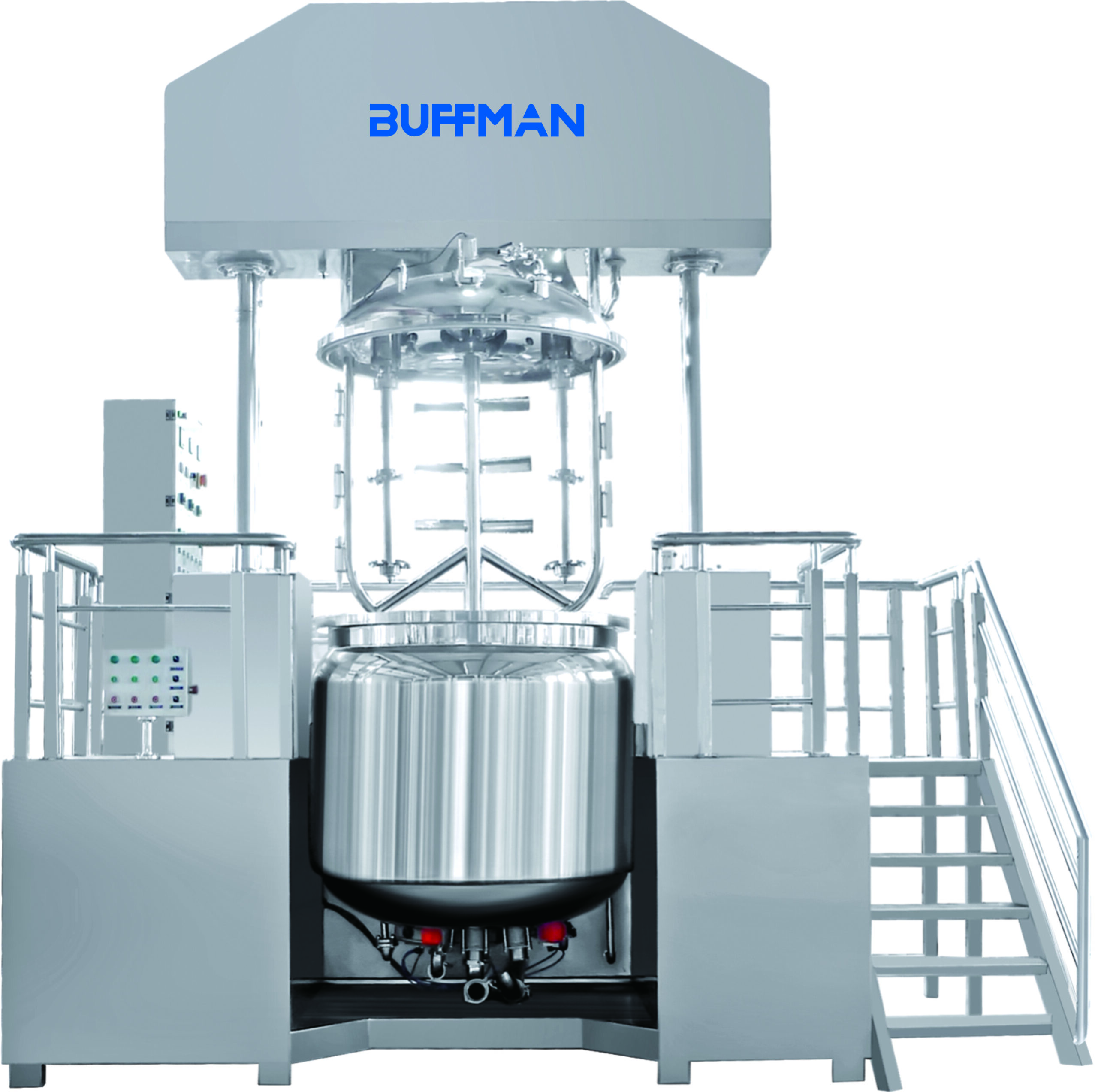
Order the machine at 415 V. Nigeria’s distribution standard is 415/240 V at 50 Hz, so a 380 V build runs about 9% over nameplate before the supply even moves — and Nigerian industrial supply is widely reported to swing 15–25%, which is where stabilisation stops being optional. On the paperwork: industrial machinery imported for a factory’s own production is exempt from SONCAP, but that exemption is not automatic — it needs a specific import permit from the Standards Organisation of Nigeria, and a lot of suppliers either tell you SONCAP applies or tell you nothing is needed. Both are wrong. The Form M and the PAAR must be correct before the vessel departs, and NAFDAC registers cosmetics to a Nigerian entity at 5 years per certificate after a factory inspection.
Four things that differ from the other markets in this series
Two of these four are routinely described wrongly by suppliers — one in each direction.
415 V, and it sags
Same nominal as India, but the supply moves far more. Winding for 415 V and sizing the control circuit for a deep sag are two separate decisions.
Exempt, but permitted
Machinery for your own production is exempt from SONCAP. The exemption needs a SON import permit. “Exempt” does not mean “nothing to arrange”.
Form M before the ship
Form M is opened by your bank before shipment; the PAAR is issued against it. Get the description or classification wrong and the query arrives while your container is on demurrage.
NAFDAC inspects the plant
Cosmetics register to a Nigerian entity, 5-year validity, and a GMP inspection of the factory sits in the path. Not a desk filing.
415 V is half the problem. The other half is what the 415 V does.
Nigeria’s distribution standard is 415/240 V at 50 Hz — the same nominal as India, and not the 380 V that our standard build, Vietnam and Indonesia all share. So the first decision is the same one: the motors are wound for the order voltage, the control transformer and contactor coils are selected against it, and the overload settings follow the actual 415 V current rather than the 380 V column.
The second decision is the one that makes Nigeria different from India. India’s statutory band is ±6%, and plants complain when it widens. Nigerian industrial supply is widely reported to swing 15–25% — the causes are structural rather than seasonal: load shedding, long transmission distances from generation to load centres, and local distribution that was not sized for the load now hanging off it. A machine specified only to the nominal voltage is a machine that will spend its life being reset.
What a 25% sag actually does to the machine
At 311 V instead of 415 V, a fixed-speed motor tries to deliver the same shaft power and draws more current to do it — the current rise is roughly inverse to the voltage drop, so a deep sag pushes a motor well past its rated current while the thermal protection is simultaneously seeing a lower voltage. Contactors drop out somewhere below 70–80% of coil rating, which means the machine can trip mid-batch rather than failing cleanly between batches. On a 1,000 L unit with electric heating, the connected load is 172.5 kW — about 282 A at 415 V — and a sag that deep on a feeder carrying that current is not a nuisance, it is an event.
| Working capacity | Mechanical load | Electric heating | Total | Current at 415 V | Current during a 25% sag |
|---|---|---|---|---|---|
| 500 L | 19 kW | 110.7 kW | 129.7 kW | approx. 212 A | approx. 283 A |
| 1,000 L | 26 kW | 146.5 kW | 172.5 kW | approx. 282 A | approx. 376 A |
| 2,000 L | 33.5 kW | 204.5 kW | 238 kW | approx. 390 A | approx. 520 A |
Three things this changes on the order, in order of cost effectiveness.
One — steam or hot water heating instead of electric. This is the big one, and it is a specification choice rather than an accessory. Electric heating is 110.7 kW of the 129.7 kW on a 500 L unit. Move that to steam and the electrical load collapses back to the mechanical figure, which means the sag has far less to disturb and the feeder requirement drops by a factor of roughly seven.
Two — a stabiliser or a dedicated feeder, sized against the measured sag. Not against the nameplate. Ask for a week of logged readings at the panel and specify from the worst reading in that week, not the average.
Three — control circuit designed to ride through, not to trip. State the undervoltage level at which you want the machine to keep running and the level at which you want it to stop safely. Those two numbers are a specification input, and a supplier who has not asked for them is designing to a default.

SONCAP: exempt does not mean nothing to arrange
This is the single most misreported item on Nigeria in supplier content, in both directions. Read the distinction before you accept a quotation that says either “SONCAP required, add USD 2,000” or “industrial machinery is exempt, no certification needed”.
SONCAP — the Standards Organisation of Nigeria Conformity Assessment Programme — is a pre-shipment conformity assessment. It runs on two certificates: a Product Certificate covering the product, and a SONCAP Certificate issued per consignment, which is what customs actually wants to see. Between them sits the Form M, opened by the importer’s bank. The structure is three documents in a fixed order, and the consignment certificate is useless without the product certificate behind it.
The exemption that applies to you
If you are a manufacturer importing machinery for your own production — not for resale — the equipment falls outside SONCAP. That is the correct reading for a cosmetics or personal care factory buying an emulsifier to make its own product.
But the exemption is a status, not a free pass. It has to be established with SON, typically through a specific import permit for the machinery, and the documentation still has to support the claim at the port. A clearing agent who hears “exempt” and stops there is the reason consignments sit at Apapa for three weeks.
Two failure modes, opposite directions.
A supplier quotes SONCAP certification on an emulsifier destined for a factory’s own line. You pay for a product certificate you did not need, and the certificate may not even be issuable for a single-unit industrial machine.
A supplier says “exempt, nothing needed” and ships. The exemption was never documented, the consignment arrives without the permit that supports it, and the delay costs more than the certificate would have.
What to do: have your Nigerian importer confirm the SON position for your specific HS line before the purchase order, in writing. Not after.
Where the 2026 process changed
From 27 March 2026, SONCAP applications and import permits are initiated through Nigeria’s National Single Window rather than the legacy portal. Certificates are still issued by the SON-accredited bodies, but activation for Form M, PAAR and clearance now runs through the single window. The practical effect is a shorter Form M approval window — reported as 7–14 working days against the older 30 — and electronic certificates verified directly against the customs system. If your agent is describing a paper process, they are describing 2025.
Form M and PAAR: the two documents that decide whether your container moves
Nigeria prices the clearance before the ship arrives. The sequence is fixed:
- Form M is opened by the importer’s bank, before shipmentIt is the import declaration and the foreign exchange reference at the same time. The machine description, the HS classification and the value all go on it.
- Customs issues the PAAR against itThe Pre-Arrival Assessment Report is Nigeria Customs’ own valuation and classification decision. It is generated from the Form M, which is why an error on the Form M becomes a PAAR query.
- The consignment clears against the PAARIf the PAAR is queried, the correction happens with the container already at the port and demurrage already running.
The failure pattern is always the same: the goods description on the invoice does not match the description on the Form M, or the HS line was chosen from a generic tariff lookup rather than confirmed for this machine. On a 2,000 L unit the difference between “machinery for mixing” and the correct eight-digit line can move the duty rate, and any mismatch is a query. Treat the invoice pack as a tax document, not as admin.
The ports, and the honest version
Apapa and Tin Can Island carry the overwhelming share of containerised machinery into Nigeria, and berth and gate congestion there is structural rather than exceptional. Clearance is migrating onto Customs’ B’Odogwu platform, and the 2025–26 transition had real problems — document-transmission failures that disrupted PAAR processing and left backlogs at the terminals. Reporting in mid-2025 said the headline faults were fixed and the backlog was clearing.
Plan with a buffer rather than a best case. And price the alternative: for a site in the east, routing through Onne instead of Lagos is sometimes cheaper once inland transport is counted, even though the ocean leg looks worse.
What the border costs — and it is less than the region’s reputation suggests
Chapter 84 capital goods attract 5% duty. The complication is that four other charges ride on top, each calculated on a different base, so they cannot be added as bare percentages.
| Charge | Base | Amount | Recoverable? |
|---|---|---|---|
| Customs duty, 5% | CIF | USD 3,000 | No — real cost |
| Surcharge, 7% of the duty | Duty | USD 210 | No — real cost |
| ECOWAS ETLS levy, 0.5% | CIF | USD 300 | No — real cost |
| Inspection levy, CISS | FOB | USD 420 – 600 | No — real cost |
| VAT, 7.5% | CIF + duty + levies | approx. USD 4,800 | Depends on registration |
Add it up and the cash at the border is roughly USD 8,700–8,900 on a USD 60,000 consignment — about 14.5% of CIF. Take the VAT out, because a VAT-registered business recovers it against output tax, and the true cost is about USD 3,900–4,100, or 6.6–6.9% of CIF. That is materially lower than most buyers expect from Nigeria, and lower than both Indonesia and India in this series.
The one number we will not pin down. The inspection levy is quoted as 0.7% of FOB in some 2026 sources and about 1.0% in others. We have shown the range rather than picking one, because the difference is small but the habit of picking a number and being wrong is expensive. Your clearing agent should confirm the applicable rate at the time of entry — along with whether the suspended 4% FOB charge has returned.
Foreign exchange, told straight
A great deal of supplier content still describes Nigeria’s foreign exchange as an insurmountable obstacle. That was true before the 2023 reforms, when the official and parallel rates differed by 50–60%. It is not true now. On 12 November 2026 the official NFEM rate was NGN 1,355.88 per USD, and the parallel market has been trading in a band a few percent above it. The gap is reported at 2–5% on most days.
That does not make FX a non-issue. What remains is timing: Form M requires an approved FX source through your bank, and a queued or delayed Form M delays the shipment regardless of the rate. Budget the timing, not just the number.
NAFDAC: the registration the factory has to earn
Cosmetics in Nigeria are regulated by the National Agency for Food and Drug Administration and Control, not by SON. Registration is mandatory before a product may be imported, advertised, sold or distributed, and it is granted to a Nigerian entity — your own subsidiary, or a local agent acting under a notarised power of attorney that names every product.
The numbers, from the agency’s own guideline
| Item | Requirement |
|---|---|
| Certificate validity | 5 years from issue |
| Processing time | 120 working days from acceptance of submissions to issuance of the registration number |
| Response window | Failure to answer NAFDAC queries within 90 working days closes the application automatically |
| Applicant | A Nigerian company incorporated with the Corporate Affairs Commission, acting under a notarised power of attorney |
| Brand name | Registered with the Trademark Registry in the name of the brand owner |
| Factory | Letter of invitation for GMP inspection, with the full factory address — not the administrative office |
| Advertising | Registration does not confer an advertising permit; that is a separate approval |
Why this is an equipment question, not only a paperwork question
Read the factory line again. NAFDAC issues a GMP inspection invitation requirement, and the inspection is of the production facility. If you are building a plant in Nigeria, the emulsifier is part of what gets inspected: the vessel, the transfer route, the cleaning regime and the records that prove it. A machine bought on price alone, without drain points or access for cleaning verification, becomes a finding in that inspection — and a finding stops the registration, which stops the revenue.
That is the same failure the Indonesian page describes in a different regulatory language: an audited plant’s series choice is a cleaning-validation decision before it is a capacity decision. In Nigeria the audit arrives before you can sell, rather than two years into operation.
The sequencing trap. 120 working days is roughly six months of agency time, and the clock only starts once the file is accepted — which needs a factory that can be inspected. So the plant has to be installed and GMP-ready before the clock starts. Machine build time and NAFDAC time therefore run in sequence, not in parallel, for a greenfield plant. If your business plan has both starting on the same day, the launch date is already wrong.
Two smaller points that cause real delays: the power of attorney must name every product rather than the brand as a whole, and it must be notarised. And NAFDAC registration does not travel with a change of agent — moving to a different local partner later means new paperwork, so choose the partner before the first filing.
The order that actually works
Nine steps. Steps two to six all complete before the purchase order — and step nine is the one that quietly sets your launch date.
- Fix the product and the batch sizeCapacity, viscosity, target particle size, vacuum or not. Series before model.
- Specify 415 V in writingWinding, control transformer, contactor coils, overload settings. On the purchase order as a technical requirement.
- Measure the sag, not the nameplateOne week of logged readings at the panel. Specify the stabiliser or feeder from the worst reading, and state the undervoltage level at which the machine should keep running.
- Decide electric, steam or hot water heatingThe single biggest lever on how much the sag can hurt you, and on the feeder requirement.
- Confirm the SON position for your HS line, in writingOwn-production machinery is exempt from SONCAP, but the exemption has to be documented and usually needs a SON import permit. Get this from your importer before the order.
- Classify the line with a brokerThe eight-digit code, the duty that follows, and whether anything attaches to it. This feeds the Form M.
- Open Form M before shipmentThrough your bank, with the same description and value that will appear on the invoice. The PAAR is issued against it.
- Plan the port and the inland legApapa or Tin Can for most destinations; price Onne for an eastern site. A crane truck at site is part of the delivery scope, not an improvisation.
- Start NAFDAC only when the plant can be inspectedAppoint the Nigerian entity, notarise the power of attorney naming each product, register the brand, then invite the GMP inspection. Budget the 120 working days from acceptance — after the plant is ready.
Frequently asked questions
Is Nigeria 380 V like China, or 415 V like India?
415/240 V at 50 Hz — the same nominal as India, and not the 380 V our standard build uses. A 380 V motor on 415 V runs about 9% above nameplate before the supply even moves. Tell us 415 V at enquiry stage, because the winding and control voltage are fixed then, not at installation.
Do we need SONCAP for an emulsifier going into our own factory?
Machinery imported by a manufacturer for its own production, not for resale, sits outside SONCAP. But the exemption is a status that has to be documented with SON — typically through a specific import permit for the machinery — not a reason to ship without paperwork. Have your Nigerian importer confirm the position for your HS line in writing before the purchase order. Suppliers who quote SONCAP certification for this case and suppliers who say nothing is needed are both getting it wrong.
What is the real import cost, once VAT is recovered?
On chapter 84 capital goods at 5% duty, cash at the border runs about 14.5% of CIF once the surcharge, ETLS levy, inspection levy and 7.5% VAT are included. Strip out the VAT, which a registered business recovers, and the true cost is roughly 6.6–6.9% of CIF. That is lower than most buyers expect, and lower than Indonesia or India in this series.
How long does NAFDAC take?
120 working days from acceptance of the file to the registration number, per NAFDAC’s own guideline, with a 5-year certificate. Two things stretch that: the clock stops whenever a compliance directive is issued, and the application closes automatically if you do not respond within 90 working days. For a greenfield plant the clock cannot start until the factory can be inspected, so budget the six months after installation, not alongside it.
Is a voltage stabiliser necessary or is it an upsell?
With a supply reported to swing 15–25%, it is usually necessary — but the right first move is not to buy a stabiliser, it is to measure. A week of logged readings tells you what the site actually does. Then two things can reduce the requirement before you spend on it: switching heating from electric to steam removes roughly seven-eighths of the connected load, and a correctly specified feeder often costs less than a stabiliser sized for a load you did not need.
Can you handle SONCAP, Form M or NAFDAC for us?
No, and no machine supplier can. SONCAP certificates come from SON-accredited conformity bodies, Form M is opened by your Nigerian bank, and NAFDAC registers to a Nigerian entity that carries the liability. What we provide is the technical input those files depend on: the rating plate at 415 V, material certificates for wetted parts, electrical drawings at your supply conditions, and manufacturing-site certifications.
Send us five things and we can quote properly
Capacity and product, the measured supply at your panel, the heating method available, your SON and HS position, and whether NAFDAC is in scope. Those five answers decide the winding, the connected load and how much of the schedule is machine and how much is agency time.
- Working capacity, viscosity and target particle size
- Measured voltage and worst-case sag at the panel
- Heating method: electric, steam or hot water
- HS line and the SON position confirmed by your importer
- Whether NAFDAC registration is in scope, and whether the plant is built
Sources and further reading
- Buffman Catalogue p.34–35, p.36–37, p.38–39 — motor, heating and vacuum ratings for the BFM-X, BFM-G and BFM-W ranges. Full-load currents calculated at 415 V and 0.85 power factor for feeder sizing.
- Nigerian distribution standard of 415/240 V at 50 Hz, per NERC metering requirements and DISCO distribution practice. Supply fluctuation of 15–25% is widely reported in industrial areas; it is a planning figure, not a guaranteed tolerance, which is why the page recommends measuring the site.
- SONCAP — Standards Organisation of Nigeria Conformity Assessment Programme: product certificate plus per-consignment certificate, with Form M between them. Exemption categories include industrial machinery imported for a manufacturer’s own production rather than resale, subject to a SON import permit.
- National Single Window transition from 27 March 2026: applications and import permits initiated through NSW, certificates still issued by accredited bodies, electronic activation for Form M, PAAR and clearance; Form M approval reported at 7–14 working days against the previous 30.
- Form M and PAAR sequence — Form M opened through the importer’s bank before shipment, PAAR issued by Nigeria Customs against it. Customs clearance migrating to the B’Odogwu platform, with 2025–26 transition disruption reported and subsequently reported as resolved.
- ECOWAS Common External Tariff for chapter 84 capital goods: 5% duty, 7% surcharge on the duty, 0.5% ETLS levy on CIF, inspection levy on FOB, 7.5% VAT on CIF plus duty plus levies. Inspection levy quoted at 0.7% in some 2026 sources and about 1.0% in others — shown as a range. A 4% FOB charge introduced in 2025 was suspended.
- Central Bank of Nigeria NFEM rate, 12 November 2026: NGN 1,355.88 per USD, with the parallel-market spread reported at 2–5% following the 2023 unification, against 50–60% before it.
- NAFDAC guideline for the registration of imported cosmetics: 5-year certificate validity, 120 working days processing from acceptance, 90-working-day response window before automatic closure, Nigerian corporate applicant under notarised power of attorney, trademark registration, GMP inspection invitation, and advertising as a separate permit.
- Landed-cost arithmetic is illustrative on a stated hypothetical CIF value at published rates. It is not a price, not a quotation, and not tax or customs advice.
This page is published by Buffman, a manufacturer of the equipment described. It is written as a procurement brief for Nigerian buyers rather than as a comparison against other suppliers.
Related pages on this site:
Vacuum homogenizing emulsifier selection guide ·
Fixed, lifting or circulation series ·
Supplying a line into Vietnam ·
Supplying a line into Indonesia ·
Supplying a line into India ·
Supplying a line into Mexico ·
Vacuum emulsifier manufacturers in China ·
Toothpaste process and equipment ·
About Buffman