
Vacuum Emulsifier Supplier for Vietnam: Power, Compliance and Sequence
Most Vietnam projects do not fail on the machine. They fail on a Form E that was never applied for, a used-equipment age rule nobody read, or a cosmetic notification filed after the container reached Cat Lai. This page is the checklist we run before we quote a Vietnamese line.
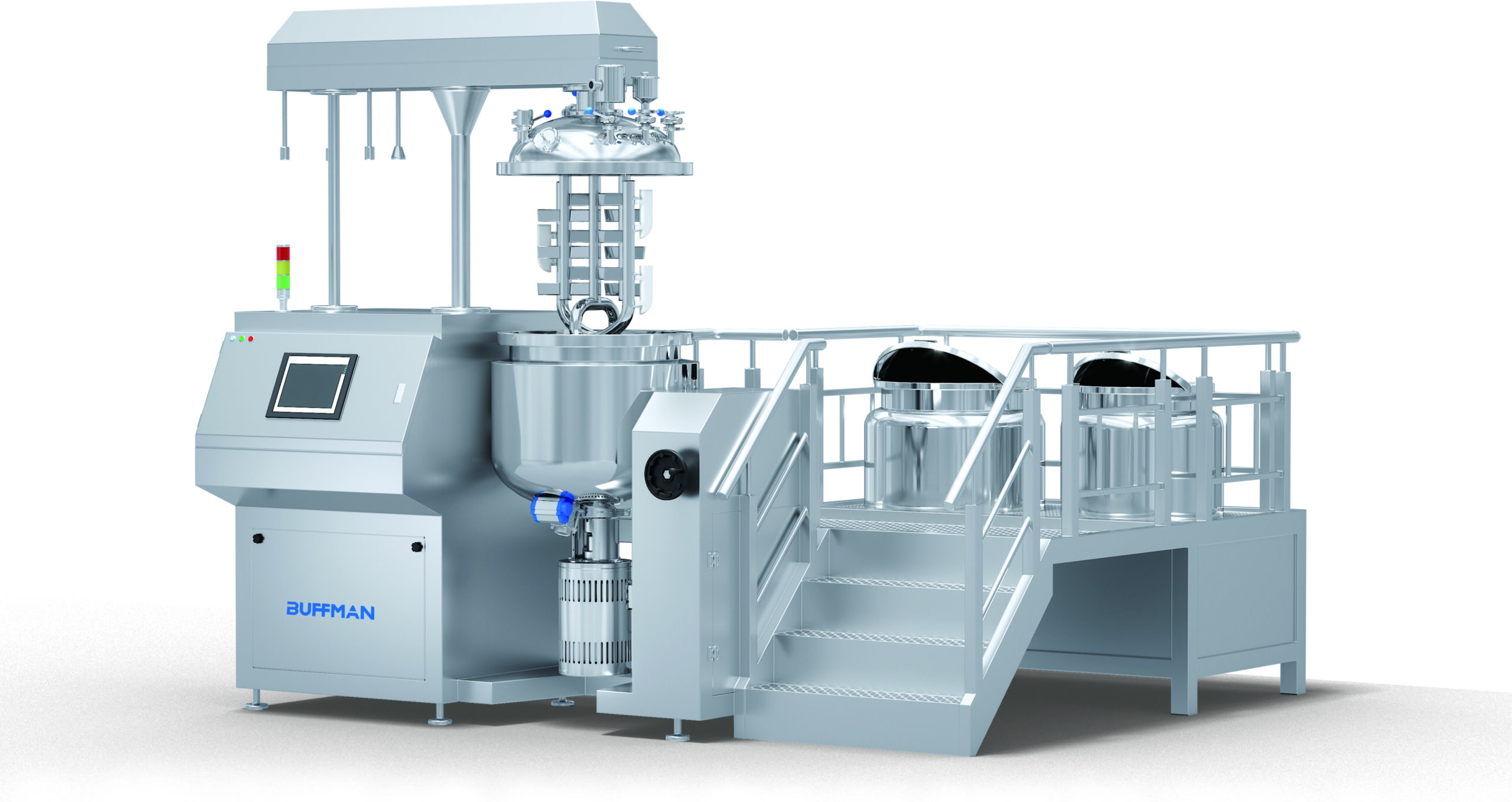
A vacuum emulsifier sold into Vietnam is almost always electrically compatible on arrival: 380 V three-phase 50 Hz is both the Vietnamese industrial standard and the configuration the BFM-G, BFM-X and BFM-W ranges are built in, so no transformer or frequency converter is needed. What separates a smooth project from a stalled one is paperwork and load sizing — the Form E certificate of origin, the ten-year rule on used machinery, the cosmetic notification lodged with the Drug Administration of Vietnam, and whether the site actually has the kVA that electric heating demands.
Four things that are actually different in Vietnam
A supplier page that only lists capacities tells you nothing. These are the four items that change a quotation or a schedule.
380 V / 50 Hz matches
Vietnam runs 380 V three-phase at 50 Hz on the EVN network, the same as the Chinese and European standard. No converter. The real risk is voltage swing and available capacity in the industrial park, not the nominal figure.
Form E, not a generic C/O
Under ACFTA, chapter 84 machinery enters at 0% for many lines — but only with a valid Form E issued before the vessel departs. There is no retroactive claim once the goods have sailed.
The cosmetic notification is yours
Every cosmetic SKU needs a notification number from DAV before customs clearance, filed by a Vietnamese responsible person. No machine supplier can do this for you, whatever the proposal says.
Used machinery has its own rulebook
Second-hand equipment is generally capped at ten years from manufacture and needs a conformity assessment before clearance. A new machine removes an entire regulatory category from the project.
The electrical question: 380 V, 50 Hz, and what it really decides
Vietnam’s industrial supply is 380 V three-phase, 50 Hz, with 220 V single-phase for smaller loads. Older plants in the north sometimes still work on a legacy 220/380 V arrangement, so the incoming panel has to be confirmed rather than assumed. For our ranges the nominal voltage is not the issue — the catalogue already lists the tube fillers with a 380/220 V option, which happens to suit the Vietnamese dual arrangement exactly.
The issue is capacity. Vietnamese industrial zones commonly deliver a voltage that swings well outside the ideal band, and a park’s allocated kVA per tenant is often fixed by the lease. That matters disproportionately for one component: heating.
Why heating dominates the electrical design
A 500 L BFM-X unit draws 19 kW for agitation, homogenisation and vacuum. The same unit with electric heating draws 129.7 kW. The heating elements are roughly 85% of the connected load, and they are the reason a factory that budgeted for “one mixer” suddenly needs a dedicated feeder, a larger breaker and sometimes a transformer upgrade.
Switch that unit to steam or hot-water heating and the electrical load collapses back to the mechanical figure. Nothing about the mixing performance changes.
Connected load by heating method
BFM-X hydraulic lifting series. Mechanical figures are the catalogue motor ratings for homogeniser, agitator and vacuum pump summed at each capacity. The steam-heated column is the electrical load only — steam comes from your boiler and appears in the thermal column instead.
| Working capacity | Mechanical load | Electric heating | Electrical load, electric-heated | Electrical load, steam-heated |
|---|---|---|---|---|
| 500 L | 19 kW | 110.7 kW | 129.7 kW · approx. 232 A | 19 kW · approx. 34 A |
| 1,000 L | 26 kW | 146.5 kW | 172.5 kW · approx. 308 A | 26 kW · approx. 46 A |
| 2,000 L | 33.5 kW | 204.5 kW | 238 kW · approx. 425 A | 33.5 kW · approx. 60 A |
If you are going the steam route, the catalogue steam-heating rating is the thermal input your boiler must supply: 26.7 kW at 500 L, 38.5 kW at 1,000 L and 48.5 kW at 2,000 L. Sizing a boiler is a different conversation from sizing a feeder, and it is worth having both numbers before you sign anything.

What Vietnamese customs and DAV will ask for
This is the part that decides whether your machine can be started up, not just whether it clears the port.
1. Form E under ACFTA
Chapter 84 machinery from China can enter at 0% or a low preferential rate under the ASEAN–China Free Trade Agreement, but the benefit is not automatic. It requires a Form E certificate of origin, issued before or at the time of shipment, in original — copies are not accepted. The goods must genuinely be manufactured in China, and the description on the Form E must match the invoice. Machinery that merely transits or is re-labelled does not qualify.
Two failure modes we see repeatedly: the buyer asks about Form E after the vessel has departed, when there is no retroactive mechanism; and the description on the certificate does not match the commercial invoice line by line, which is enough to lose the preference at the counter.
2. New versus used machinery
Vietnam applies a materially stricter regime to second-hand equipment. Under Decision 18/2019/QD-TTg, imported used machinery must generally be no more than ten years old from the date of manufacture, must conform to a Vietnamese national technical regulation or to the corresponding standard of a G7 country or Korea, and must carry a conformity assessment from a designated inspection body before clearance. If the manufacturing year cannot be documented, the container is refused.
For a cosmetic or pharmaceutical line, buying new removes an entire regulatory category. That is usually the cheapest decision on the whole project, even when the used unit looks attractive on paper.
3. Equipment on the safety inspection list
Some components attached to a process line fall under Vietnam’s list of machinery with strict occupational safety requirements and need technical inspection — typically air receivers, lifting equipment and certain pressure components rather than the vessel itself. The inspection usually happens before the equipment is put into service rather than at the border, which means it belongs in your commissioning schedule.
4. The cosmetic notification
Separately from the machine, every cosmetic product sold in Vietnam needs a notification number from the Drug Administration of Vietnam. The filing must be completed before the goods clear customs, is valid for five years, and must be submitted by a Vietnamese legal entity acting as the responsible person. The dossier includes a Certificate of Free Sale legalised by the Vietnamese consulate, an ingredient list in INCI names, label artwork, and a Product Information File with a signed safety assessment.
A draft replacement decree was notified to the WTO as G/TBT/N/VNM/407 on 29 May 2026 and is slated to take effect at the end of 2026. It keeps the five-year notification, makes the Product Information File mandatory for all products in circulation, keeps the requirement to notify before customs clearance, and moves post-market surveillance to risk-based inspection. If your launch straddles that date, plan for the stricter version.
The sequencing trap. A machine can be installed, commissioned and running while the factory still cannot legally fill a single tube, because the product notification was filed as an afterthought. The machine lead time and the notification lead time run in parallel, not in sequence. Start both on the same day.
Three site conditions that change the specification
Humidity and corrosion
Vietnam’s ambient humidity stays high across the year, and a plant that is washed down daily is a harder environment than the same plant in a dry climate. This is a specification item, not a maintenance item: motor enclosure ratings, winding treatment, terminal box sealing, and the choice between 304 and 316 stainless on wetted parts all get decided at order stage. Retrofitting them later costs more than the original difference.
Raw water conductivity
The BFM-RO secondary reverse osmosis range is rated for raw water at or below 300 µS/cm. Municipal supply in parts of Vietnam, and well water almost anywhere, can sit above that, and the correction is pretreatment — softening, multimedia filtration, or both — not a bigger RO skid. If you specify the water system on the finished-water figure alone, you will buy a unit that underperforms from the first week.
Headroom, access and floor
A 2,000 L BFM-X unit measures roughly 1,880 × 1,880 × 3,350 mm before you add the lifting frame and the platform. That is a building constraint as much as a machine constraint: door height, the route from the container to the room, overhead clearance for the lift, and floor loading all need checking before the order, because none of them can be solved by the machine.
What we ask a Vietnamese buyer before quoting.
Incoming voltage and available kVA per phase at the panel. Steam, hot water or electric heating, and if steam, boiler capacity. Raw water source and its measured conductivity. The tallest and widest opening on the route from loading bay to production room. Product viscosity and target particle size. Whether the product is a cosmetic requiring DAV notification, and whether a responsible person is already appointed.
What we can document, and what only your importer can
Being clear about this boundary saves months. We have seen proposals from other suppliers that imply they will handle Vietnamese product registration; in practice that work is subcontracted to a local consultant, and the accountability sits with your responsible person either way.
| We provide | Your Vietnamese entity or importer provides |
|---|---|
| CE certification and ISO 9001 quality management system certification for the manufacturing site | Import licence and customs declaration under your own importer code |
| Electrical drawings and control schematics at your supply voltage and frequency | Form E application routing on the Vietnamese side, and the customs broker who lodges it |
| Material certificates for wetted parts on request | Certificate of Free Sale for the finished cosmetic, legalised by the Vietnamese consulate |
| Assembly and run-in records from the Gaoyou workshop | Cosmetic notification with DAV, filed by a Vietnamese responsible person |
| Packing list, dimensions, weights and lifting points for the shipping and installation plan | Booking of technical inspection for any equipment on the safety list |
| Form E application through CCPIT where the goods meet ACFTA origin rules — confirm this before you sign, not after | Installation permits, local labour, and utilities connection |
The sequence that actually works
Eight steps, in this order. Steps two to six all happen before the purchase order, which is the opposite of how most projects are run.
- Fix the product and the batch sizeCapacity, viscosity, target particle size and whether the process needs vacuum. This decides the series before it decides the model.
- Confirm the incoming supplyActual voltage at the panel, allocated kVA, and whether the park tolerates the swing you are seeing. Ask for a week of logged readings if the plant is already running.
- Decide the heating methodElectric, steam or hot water. Do this before the quotation, because it changes the electrical load by a factor of nearly seven and therefore the infrastructure cost.
- Measure the raw waterConductivity at the source, not at the tap after any existing treatment. This decides whether the RO needs pretreatment ahead of it.
- Walk the routeContainer to room. Door heights, turning radii, overhead clearance for the lift, floor loading. Photograph the pinch points and send them.
- Put Form E on the purchase orderAs a line item with the exact goods description and HS code. It is a document that has to be issued before departure, so it belongs in the contract, not in an email afterwards.
- Start the cosmetic notification the same weekAppoint the responsible person, get the CFS legalised, and begin the Product Information File. This has its own lead time and it does not wait for the machine.
- Ship, inspect, install, commissionClearance, technical inspection where applicable, installation, then commissioning against the process parameters you specified in step one.
Frequently asked questions
Do your machines work on Vietnam’s 380 V 50 Hz supply?
Yes. 380 V three-phase 50 Hz is the standard configuration for the BFM-G, BFM-X and BFM-W ranges, so no transformer or frequency converter is needed. The tube fillers are listed with a 380/220 V option, which also suits older northern plants running a dual-voltage arrangement. Send us the actual panel readings and we will confirm the motor and control configuration against them.
Can you supply a Form E certificate of origin?
We can apply through CCPIT where the goods meet ACFTA rules of origin, which machinery manufactured at our Gaoyou site normally does. Confirm it at quotation stage rather than after the order, because the certificate must be issued before the vessel departs and there is no retroactive claim.
Do you sell used or refurbished emulsifiers?
We manufacture new equipment. That is worth stating plainly, because Vietnam’s Decision 18/2019/QD-TTg restricts imported used machinery to generally under ten years old and requires a conformity assessment before clearance. Buying new avoids that category entirely.
What raw water quality does the RO system need?
The BFM-RO range is rated for raw water at or below 300 µS/cm. If your source is above that, the fix is pretreatment ahead of the RO rather than a larger skid. Measure at the source and send us the figure — it is the single number that decides the water system configuration.
Can you handle the Vietnamese cosmetic product notification for us?
No, and no machine supplier can. The notification must be filed with the Drug Administration of Vietnam by a Vietnamese legal entity acting as responsible person. What we provide is the technical input that dossier needs: material certificates, electrical documentation and manufacturing-site certifications.
Is electric heating a problem on a Vietnamese supply?
It can be. At 2,000 L, electric heating takes the connected load to 238 kW — around 425 A at 380 V — against 33.5 kW for the same unit on steam. If your allocated kVA will not carry that, steam or hot water is the answer, and it is a decision to make before the quotation rather than after the electrical contractor visits.
Send us the four numbers, get a real configuration
Voltage and available kVA at the panel, raw water conductivity, the largest door on the route, and the working capacity you need. With those four we can tell you which series fits, what the connected load will be, and what the electrical and steam infrastructure has to carry.
- Working capacity and product viscosity
- Incoming supply and available kVA per phase
- Heating preference and boiler capacity if steam
- Raw water conductivity at the source
Sources and further reading
- Buffman Catalogue p.34–35, p.36–37, p.38–39 — motor, heating and vacuum ratings for the BFM-X, BFM-G and BFM-W ranges; p.56–57 for the BFM-RO raw water limit; p.60–61 for the 380/220 V option on tube fillers.
- Vietnam industrial supply at 380 V three-phase 50 Hz on the EVN network — consistent across Vietnamese and international electrical references; older northern plants may run a 220/380 V dual arrangement.
- ACFTA preferential treatment and Form E requirements, including issue before shipment and the original-only rule — ASEAN–China Free Trade Agreement guidance published by Vietnamese logistics providers.
- Decision 18/2019/QD-TTg on the import of used machinery, equipment and technology lines — ten-year age limit and conformity assessment requirement.
- Circular 06/2011/TT-BYT and the ASEAN Cosmetic Directive, as implemented by the Drug Administration of Vietnam — notification before customs clearance, five-year validity, responsible person and Product Information File requirements.
- Draft cosmetics decree notified to the WTO as G/TBT/N/VNM/407 on 29 May 2026, with a stated intention to take effect at the end of 2026. Described here as a draft, not as current law.
- Full-load currents are calculated from the catalogue ratings at 380 V, three-phase, power factor 0.85. They are indicative figures for feeder sizing, not a substitute for your electrical contractor’s design.
This page is published by Buffman, a manufacturer of the equipment described. It is written as a procurement checklist for Vietnamese buyers rather than as a comparison against other suppliers.
Related pages on this site:
Vacuum homogenizing emulsifier selection guide ·
Fixed, lifting or circulation series ·
Supplying a line into Indonesia ·
Supplying a line into India ·
Supplying a line into Nigeria ·
Supplying a line into Mexico ·
Vacuum emulsifier manufacturers in China ·
Toothpaste process and equipment ·
Tube filling: aluminium vs plastic ·
Purified water systems ·
About Buffman