
Vacuum Emulsifier Supplier for Indonesia: Masterlist, Halal and the Machine
Indonesia is the one ASEAN market where the paperwork changes the machine. The electricity is identical to China and needs nothing done to it. What changes is that import duty is only recoverable if the Masterlist is approved before the vessel sails, and that a halal-audited plant imposes cleaning and segregation duties that reach into how the vessel is built, accessed and drained.
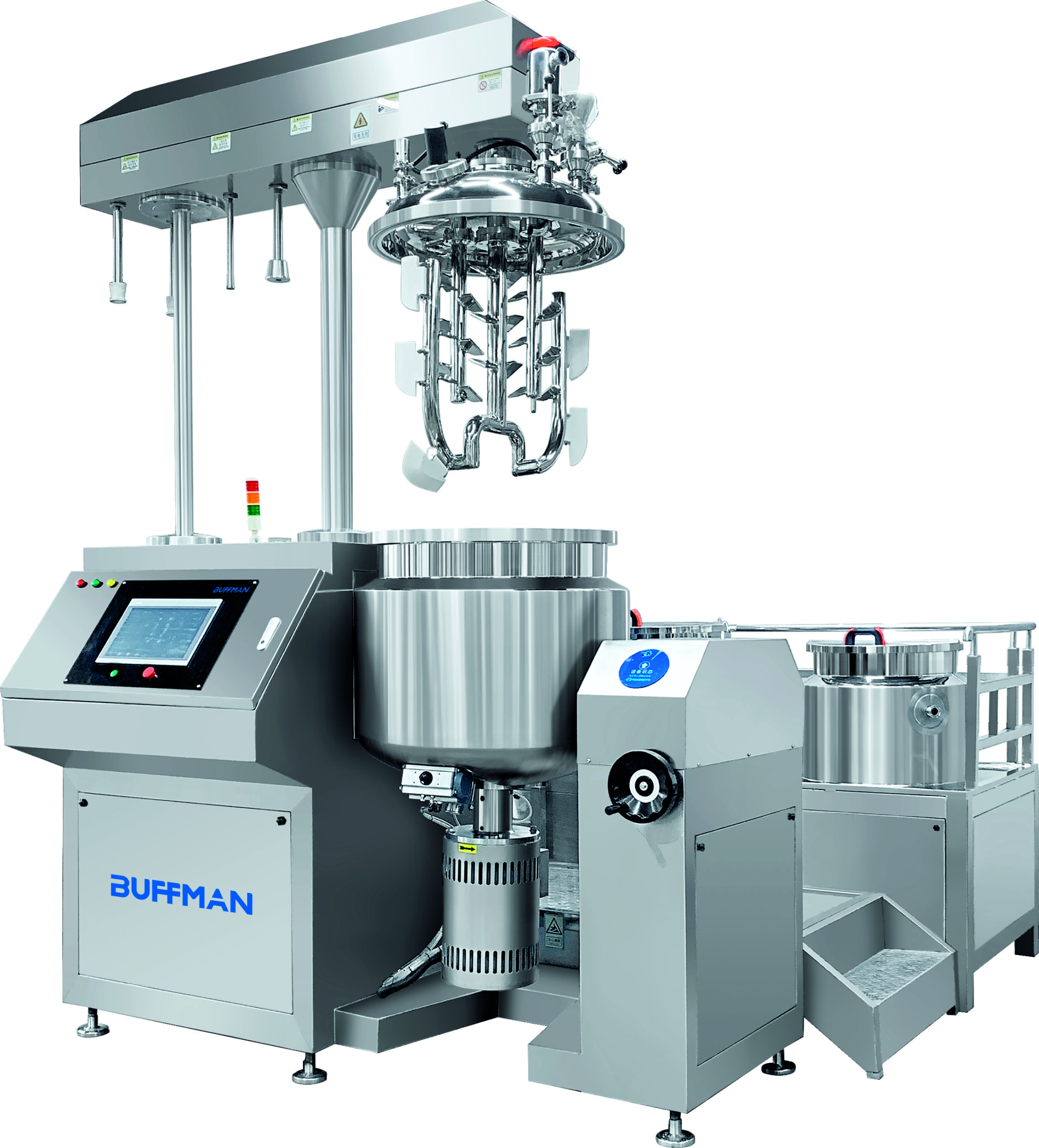
An Indonesian industrial supply is 380 V three-phase at 50 Hz, the same standard our BFM-G, BFM-X and BFM-W ranges are built in, so no transformer or frequency converter is needed. Three other things decide the project. First, import duty plus VAT plus income-tax prepayment can add roughly a fifth to the landed cost unless the Masterlist is approved before shipment — and it cannot be applied for after the container arrives. Second, a factory holding an API-U trading licence cannot import a machine for its own production. Third, if the plant is meant to pass a halal audit, the requirement is not only on the ingredient list: it extends to how the equipment is cleaned, accessed and segregated, which is a specification decision made before the machine is built.
Four things that actually differ from a Chinese or Vietnamese project
A supplier page that lists capacities tells you nothing about Indonesia. These four are the ones that change the quotation, the schedule or the machine itself.
Masterlist, before the ship
The only route that removes duty and import VAT. Approved by BKPM through OSS, and it must clear before goods leave. Arriving first and applying afterwards does not work.
API-P, not API-U
A factory importing a machine for its own production needs the producer licence. Holding only the trading licence blocks the import, and the error surfaces at the port.
It reaches into the machine
Segregated lines, storage, CIP and utensils; documented cleansing for shared equipment. The audit looks at head access, drain points and dead corners — not only at the formula.
Notification is per batch
The BPOM notification covers the product for three years, but every single import shipment still needs its own release letter before customs will let it go.
What the border actually costs, and which part of it is real
Chapter 84 machinery carries a most-favoured-nation duty commonly in the 0–5% band, VAT at 12%, and an income-tax prepayment collected at the border. On their own those numbers sound like a 20% penalty. They are not, and the distinction matters more than the headline.
| Route | Duty | VAT (PPN) | Prepayment (PPh 22) | Cash at the border | True cost |
|---|---|---|---|---|---|
| No facility, no Form E | USD 3,000 | USD 7,560 | USD 1,575 | USD 12,135 | USD 3,000 |
| ACFTA Form E only | USD 0 | USD 7,200 | USD 1,500 | USD 8,700 | USD 0 |
| Form E + Masterlist + VAT exemption | USD 0 | USD 0 | USD 0 | USD 0 | USD 0 |
Why the last column is mostly zero
VAT paid at import is input tax. If your company is registered as a taxable enterprise and sells taxable goods, you credit it back — it is a cash-flow event, not a cost. The income-tax prepayment works the same way: it is an advance against your corporate income tax, creditable when you file. Only the duty is money you never see again.
That reframing changes the decision. The question is not “how do I avoid a 20% surcharge” but “can I carry the cash for one to three months, and is the duty worth removing”. For a single machine the duty is a modest line. For a full line it is the difference between a comfortable project and a tight one — which is why the Masterlist conversation belongs at the start of a project, not at the shipping stage.
One exception worth knowing. If your entity is not registered as a taxable enterprise, or your output is exempt, the import VAT is not recoverable and becomes a genuine cost. Ask your tax advisor which applies to you before you treat the VAT as neutral.
The Masterlist: the one thing that cannot be fixed afterwards
This is the single most consequential document in an Indonesian equipment project, and the single most common thing to discover too late. A Masterlist is a BKPM approval listing, machine by machine, the production equipment you intend to import. With it, customs duty is relieved and — with a separate VAT exemption certificate from the tax office — the import VAT too. Without it, you pay at the border and cannot claim the duty back later.
The three eligibility conditions
- Industrial activity, by classificationThe company’s registered business classification must be an industrial production category. A trading company or a pure service company does not qualify, however industrial the equipment looks.
- Project in construction or expansionA new factory, a capacity expansion or an addition to an existing line qualifies. Once the plant is commissioned and running, the window closes.
- Equipment Indonesia cannot supply to specNot produced domestically, or produced but outside the required specification, or produced in insufficient quantity. A vacuum homogenising emulsifier in the capacities and finish this industry needs normally falls inside that gap, but the justification is written per machine.
What has to exist before you can apply
The company first: business identification number from the single-submission system, tax registration number, deed of establishment, foreign-investment approval, customs identification, and the importer identification number. Then a work plan that includes cooperation with Indonesian micro, small and medium enterprises — a requirement that surprises first-time applicants and is routinely missing from the file.
The timing rule. The application is normally submitted around two months before shipment, and the machine description on the approval must match the commercial documents. Equipment that has already arrived cannot be added to a Masterlist retrospectively. If you are reading this after the booking has been made, check the status of the approval before the container is loaded, not after.
Two separate documents are involved, and they are often confused: the Masterlist covers duty, and the VAT exemption certificate covers VAT. Both are needed to reach zero.
API-P or API-U: a two-letter decision that stops shipments
The importer identification number comes in two categories. The producer version is for a company importing goods for its own use in production. The general trading version is for a company importing to resell. Both are legitimate; using the wrong one is not, and the mismatch only becomes visible when a declaration is lodged.
A factory that holds only the trading category can find itself unable to import the machine it bought to make its own product. The reverse is equally painful: a factory holding only the producer category cannot import goods it intends to sell on. Foreign-investment companies setting up a plant normally register the producer category from the start, but the classification is set during company registration, and correcting it later takes time you may not have.
What else sits on the same declaration
Certain goods appear on the restricted list and need an additional approval before they can be imported at all. Selected electro-technical products require mandatory Indonesian national standard certification — process machinery as such is generally outside that list, but loose electrical components and control gear shipped with a machine can be caught, so the certificate scope is worth confirming rather than assuming. A safety, health and environment registration applies to specified goods. Every declaration passes through the national single window, which means the same data has to be consistent across the customs, tax and investment systems.
Ask before the purchase order.
Which importer category does the entity hold? Is the investment approval current? Is the HS line on the restricted list? Does anything on the machine need national-standard certification? These five answers, given before the order, cost nothing. Given after the vessel sails, they cost weeks.
Halal does not stop at the formula
This is the part of the Indonesian market that no machine supplier website discusses, and it is the part that most affects what you should order. Read the deadline carefully first, because it moved.
Status of the deadline, as of November 2026. Under Government Regulation 42/2024, cosmetics were scheduled to require halal certification from 18 October 2026. On 16 October 2026 the Coordinating Ministry for Economic Affairs announced that the transition period for cosmetics, traditional medicines, health supplements, chemical and genetically modified products would be extended to 17 October 2028, with the amending regulation to follow. The obligation was not cancelled — only the date moved. Treat 2028 as the planning horizon and start the certification work now, because the audit is about your factory, not your paperwork.
What the audit actually inspects
The halal assurance system requires separation between halal and non-halal activity that goes well beyond the ingredient list: production lines, storage areas, cleaning-in-place circuits, utensils and shipping containers. Equipment shared between the two must go through documented cleansing, and for heavy contamination there is a specified purification sequence — seven washes, one of them with soil or an approved equivalent — before the equipment may return to halal duty. One rule is absolute: no item may be used alternately for pork-derived and non-pork material.
A draft guideline specific to cosmetics was notified to the WTO in June 2026 and lists the control points it expects a factory to document: segregated raw-material storage, dedicated sampling tools, segregated weighing, control of equipment and cleaning agents and personnel, sealed storage for semi-finished material, and segregated packaging. Read that list again with an equipment buyer’s eye, because every line on it maps to something you either specify at order stage or retrofit at cost.
The control point to specification table
Left column is what the auditor asks for. Right column is what it changes about the machine you should be quoting.
| Control point | What it changes on the order |
|---|---|
| Segregation of production equipment | If the same vessel may see both halal and non-halal material, you need documented cleaning plus, for heavy contamination, a purification procedure the machine must physically survive. State the cleaning regime at enquiry stage. |
| Access for cleaning and inspection | Head access is the deciding feature. The BFM-X hydraulic lifting series raises the head clear of the vessel so the interior, the agitator and the homogeniser head can be inspected and documented. The BFM-G fixed series keeps the head in place for the life of the installation. |
| Circuits that cannot be drained or inspected | The BFM-W internal and external circulation series adds an external piping loop. That loop is extra wetted surface to clean, drain and evidence. It is the right machine when product stratifies, and the wrong machine when your audit burden is already the constraint. |
| Cleaning agents and their compatibility | Alkaline detergents and clay slurry are aggressive against stainless. Our filling range is catalogued in 304 and 316L; for an emulsifier on that cleaning regime we do not publish a fixed grade, so state the detergent set and we will specify the wetted-part grade against it in writing. |
| Dedicated sampling and weighing tools | These are consumables, not machine parts, but the supplier can quote a second set with the order — sampling valve, scoops, containers — so that both lines have their own. Buying them later from a local source is slower and harder to document. |
| Sealed holding of semi-finished material | A vacuum vessel is closed by design, which helps. Confirm the discharge route and the receiving container are closed too, because the audit follows the material out of the vessel. |
| Traceability to the material of construction | Ask for material certificates for wetted parts at quotation stage. A certificate that arrives after commissioning is harder to place in a batch record. |
There is a genuine engineering consequence here that is worth stating plainly: for an audited plant, the series choice becomes a cleaning-validation decision rather than a capacity decision. Two factories with the same batch size and the same product can correctly end up with different machines, because one has to evidence cleaning and one does not.
The electrical question, which in Indonesia is almost a non-question
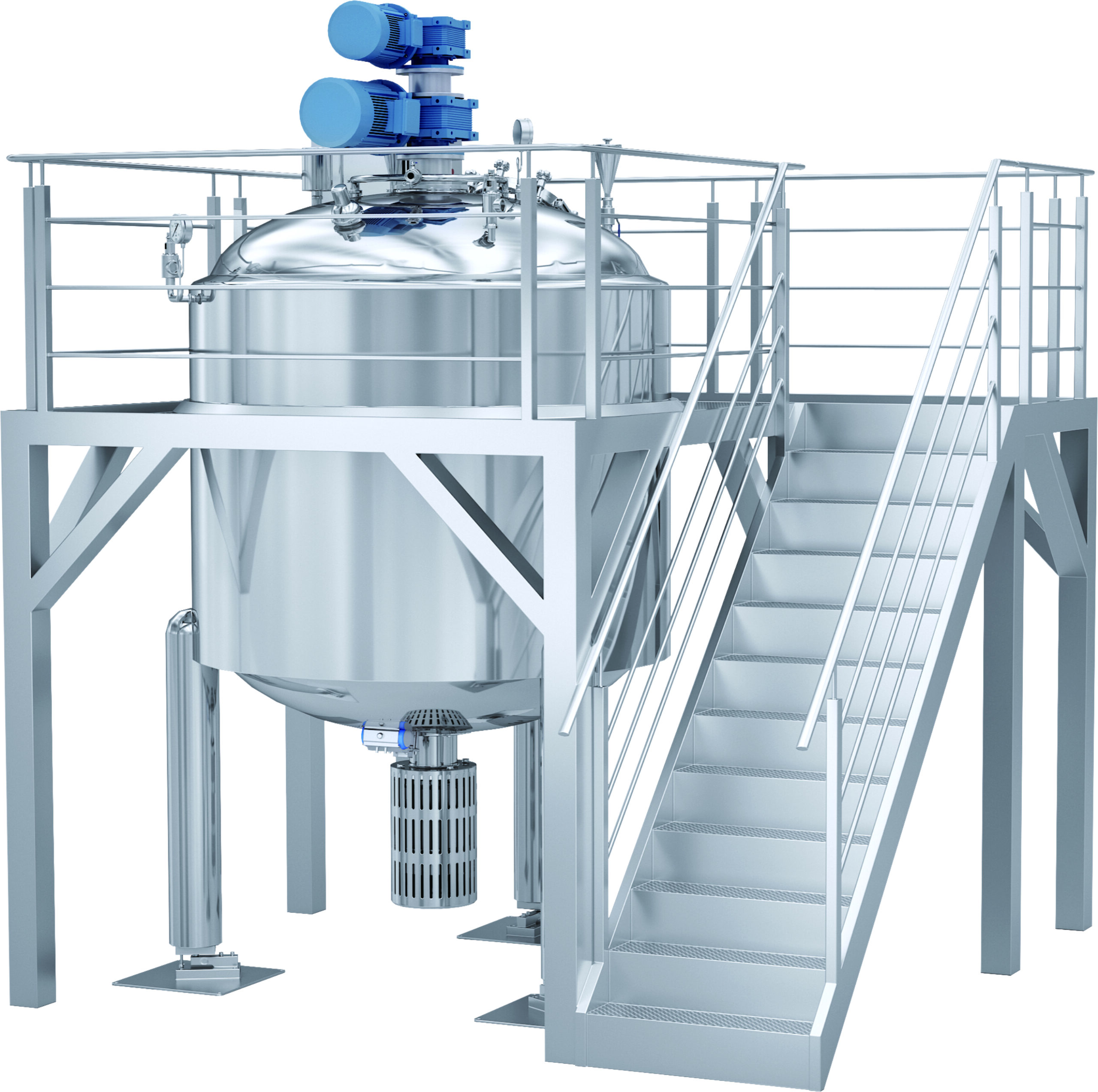
Indonesia runs 380 V three-phase at 50 Hz with 220 V single-phase for smaller loads, which is the same arrangement our ranges are built in. There is nothing to convert and no transformer to buy. Compared with a 60 Hz market, this part of the project is easy, and any supplier telling you otherwise is solving a problem you do not have.
What is not easy: the supply behind the socket
Grid quality varies considerably by island, and a plant outside the main Java corridor may run fully or partly on its own generating set. Two consequences follow.
First, voltage tolerance. Specify the acceptable band and ask for a stabiliser quotation if the site experiences sags — a control system that resets mid-batch costs more in lost product than the stabiliser does.
Second, and more important, genset sizing. Heating is the dominant load: at the same 500 L capacity, a mechanically-driven BFM-X draws 19 kW, while the electrically-heated version of that unit draws 129.7 kW. That is roughly a factor of seven, and it is the number your generator has to carry, not the motor rating on the nameplate. If the site runs on a genset or has a limited supply, choosing steam or hot-water heating collapses the electrical requirement back to the mechanical figure and changes the whole infrastructure cost.
Ask for one week of logged readings. Nominal voltage tells you what the utility promises. A week of readings at the panel tells you what the site actually receives, and it is the difference between specifying a machine that runs and one that trips.
BPOM: the product registration and the thing everyone forgets
Cosmetics enter Indonesia by notification rather than full registration. A successful notification produces an eleven-character number, is specific to a single product, and lasts three years, with renewal filed at least thirty days before expiry. A new shade, a new scent or a changed formulation is a new notification, not an amendment.
A foreign manufacturer cannot hold the notification. It must sit with an Indonesian legal entity — your own foreign-investment company, an appointed distributor, or a licensed partner — which needs its own business identification, importer identification and cosmetics distribution licence, and which is subject to a BPOM audit of its warehouse and distribution practice. Government fees differ by origin: products made in an ASEAN member state are charged at a lower per-product rate than products made outside ASEAN, and each variant is charged separately. Review time is short by regional standards — a few working days for perfume, around two weeks for other cosmetics — but the company-side account verification runs in parallel and often takes longer than the product file.
The step that is missed: the per-shipment release letter
The notification makes the product legal. It does not release a shipment. Each import consignment needs its own import release letter before customs will clear it. Factories that have done the notification work correctly still lose weeks at the port because nobody requested the release letter for that particular batch. Build it into the shipping checklist rather than discovering it at the counter.
Testing is also constrained: microbiological and heavy-metal panels are the baseline, preservative challenge testing is expected for aqueous emulsions, and sunscreens need protection-factor data. The reports have to come from laboratories BPOM recognises, so a report prepared for another market is not automatically usable.
The order that actually works
Nine steps. Steps three to seven all happen before the purchase order, which is the opposite of how most Indonesian equipment projects are actually run.
- Fix the product and the batch sizeCapacity, viscosity, target particle size, vacuum or not. This decides the series before it decides the model.
- Decide whether the plant will be auditedIf halal certification is in scope, even on a 2028 horizon, the cleaning and segregation requirements are set now. This is a specification input, not a later project.
- Confirm the importer category and the investment approvalProducer category for own use, current investment approval, and consistency across the single-window systems.
- Check the HS lineDuty rate, restricted-list status, and whether any component on the machine needs national-standard certification. Do this before the quotation is finalised, not after.
- Start the Masterlist, about two months before shipmentDuty relief and VAT exemption are two documents from two authorities. Both must clear before the goods leave, and neither can be obtained retroactively.
- Confirm the supply qualityVoltage at the panel, a week of readings, whether a genset is involved, and what heating method the site can carry.
- Put the shipping documents in the purchase orderForm E where ACFTA origin rules are met, and the exact goods description that matches both the Masterlist and the invoice.
- Run the product side in parallelAppoint the local notification holder, compile the dossier with a recognised laboratory report, and start the halal file if the product is in scope. None of this waits for the machine.
- Ship, request the release letter, install, commissionPer-shipment release letter before clearance, then installation and commissioning against the parameters fixed in step one.
Frequently asked questions
Do your machines run on Indonesia’s 380 V 50 Hz supply?
Yes, and nothing has to be changed. 380 V three-phase 50 Hz is the standard build for the BFM-G, BFM-X and BFM-W ranges, so there is no transformer and no frequency converter. What we do ask for is a week of panel readings, because the supply quality behind the socket varies by island and a genset-fed site needs different sizing.
Can the Masterlist be applied for after the machine arrives?
No. The approval has to be in place before the equipment ships, and the machine description on it must match your commercial documents. Equipment that has already landed cannot be added retrospectively, so the application usually starts around two months before the booking. Duty already paid at the border is not refundable through this route.
We are a factory buying a machine for our own production. Which importer licence?
The producer category. The general trading category is for companies importing to resell, and holding only that one can block an import intended for your own line. The category is set during company registration, so confirm what your entity actually holds rather than what it was meant to hold.
Is halal certification required for cosmetics in Indonesia right now?
As of November 2026, no — the transition period was extended. The original date was 18 October 2026; on 16 October 2026 the government announced cosmetics, traditional medicines and related categories would move to 17 October 2028, with the amending regulation to follow. The obligation itself was not cancelled. BPOM product notification, by contrast, is required today and is a separate process.
One emulsifier serves two brands, one of which is not halal-certified. Is that allowed?
There is a limited provision for sharing a facility with a product that is not itself certified, provided that product contains no prohibited ingredients and provided you submit the product name, material list, process flow and purification treatment to the certifying body. Where prohibited material is involved, the rule is physical segregation — separate equipment, or a dedicated line. This is exactly the case where the series choice matters, so raise it at enquiry stage.
Does electric heating work on a generator?
It can, but the generator has to carry it. At 500 L, electric heating takes the connected load to 129.7 kW against 19 kW for the same unit driven mechanically — roughly a factor of seven. If the site is genset-fed or the supply is capped, steam or hot-water heating removes almost all of that load without changing mixing performance.
Send us five things and we can quote properly
Capacity and product, whether the plant will be halal-audited, the importer category your entity holds, the supply at the panel, and the heating method available. Those five answers decide the series, the electrical scope and the documents that have to accompany the shipment.
- Working capacity, viscosity and target particle size
- Whether halal certification is in scope, and on what timeline
- Importer category held, and Masterlist status
- Voltage, available capacity, and whether a genset is involved
- Heating method: electric, steam or hot water
Sources and further reading
- Buffman Catalogue p.34–35, p.36–37, p.38–39 — motor, heating and vacuum ratings for the BFM-X, BFM-G and BFM-W ranges; p.58–59 for the 304/316L material specification on the filling range.
- Government Regulation No. 42 of 2024 on the implementation of halal product assurance, and Law No. 33 of 2014 on halal product guarantee, for the staggered certification timeline and the segregation requirements.
- Coordinating Ministry for Economic Affairs announcement of 16 October 2026, as reported by the Shandong Provincial Department of Commerce on 4 November 2026, extending the transition period for cosmetics and related categories to 17 October 2028.
- Draft implementing guideline for the cosmetic halal assurance system, notified to the WTO as G/TBT/N/IDN/187 on 3 June 2026 — the source for the control-point list in the table above. Still a draft at the time of writing.
- BPOM cosmetic notification framework: notification rather than registration, three-year validity, single-product and per-variant scope, local holder requirement, and per-shipment import release letter.
- Indonesia tariff schedule as published through the national single window — chapter 84 duty in the 0–5% band, VAT at 12%, income-tax prepayment at 2.5% with an importer identification number and 7.5% without; ACFTA preferential rate at 0% with a valid Form E.
- Masterlist eligibility and documentation requirements under the investment coordination framework: industrial classification, construction or expansion stage, domestic-availability test, and the two separate instruments for duty and VAT.
- Full-load and heating figures are the catalogue ratings. The landed-cost table is arithmetic on the published rates at a stated hypothetical value — it is not a price and not a quotation.
This page is published by Buffman, a manufacturer of the equipment described. It is written as a procurement brief for Indonesian buyers rather than as a comparison against other suppliers.
Related pages on this site:
Vacuum homogenizing emulsifier selection guide ·
Fixed, lifting or circulation series ·
Supplying a line into Vietnam ·
Supplying a line into India ·
Supplying a line into Nigeria ·
Supplying a line into Mexico ·
Vacuum emulsifier manufacturers in China ·
Toothpaste process and equipment ·
Tube filling: aluminium vs plastic ·
Purified water systems ·
About Buffman